The missing soundings
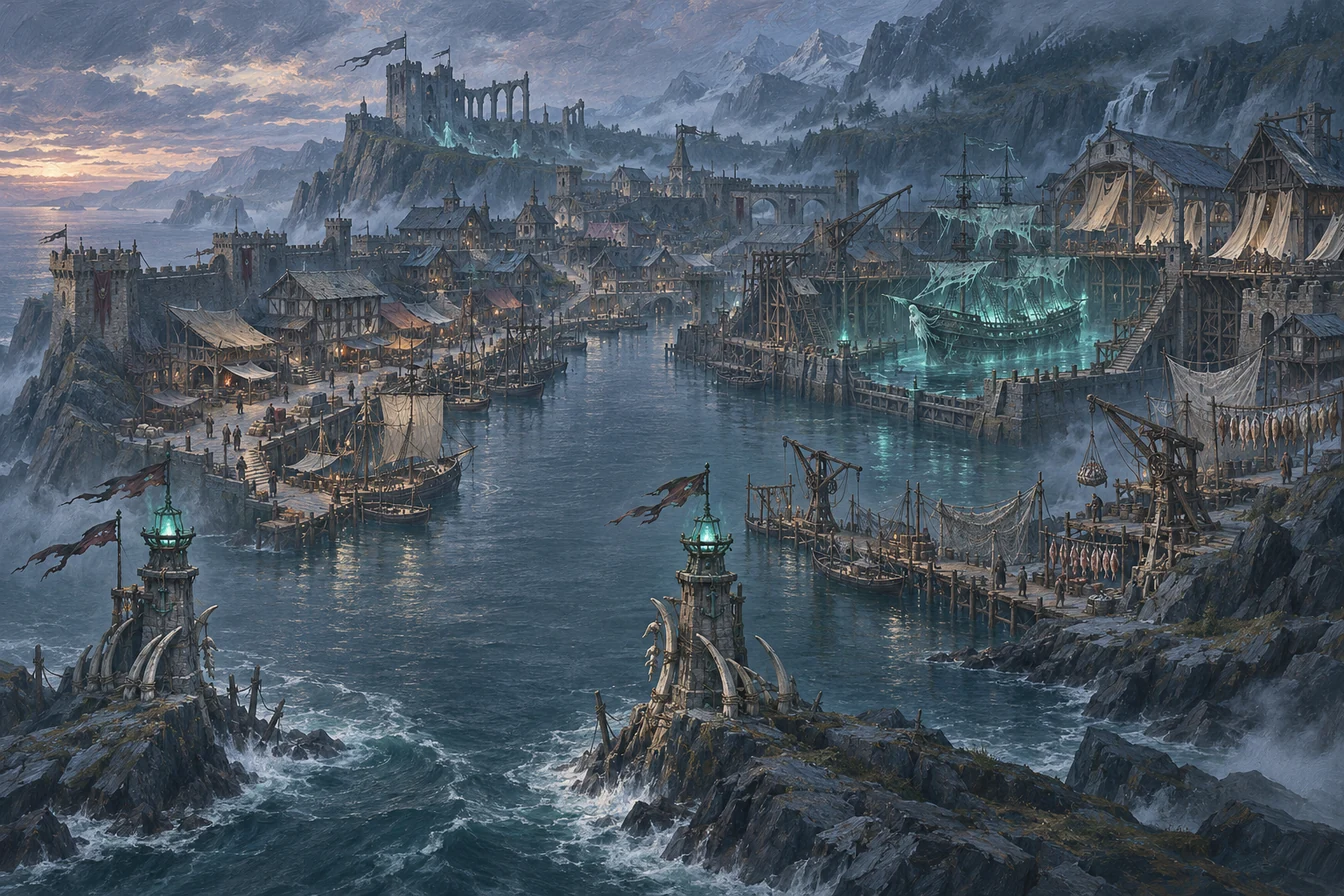
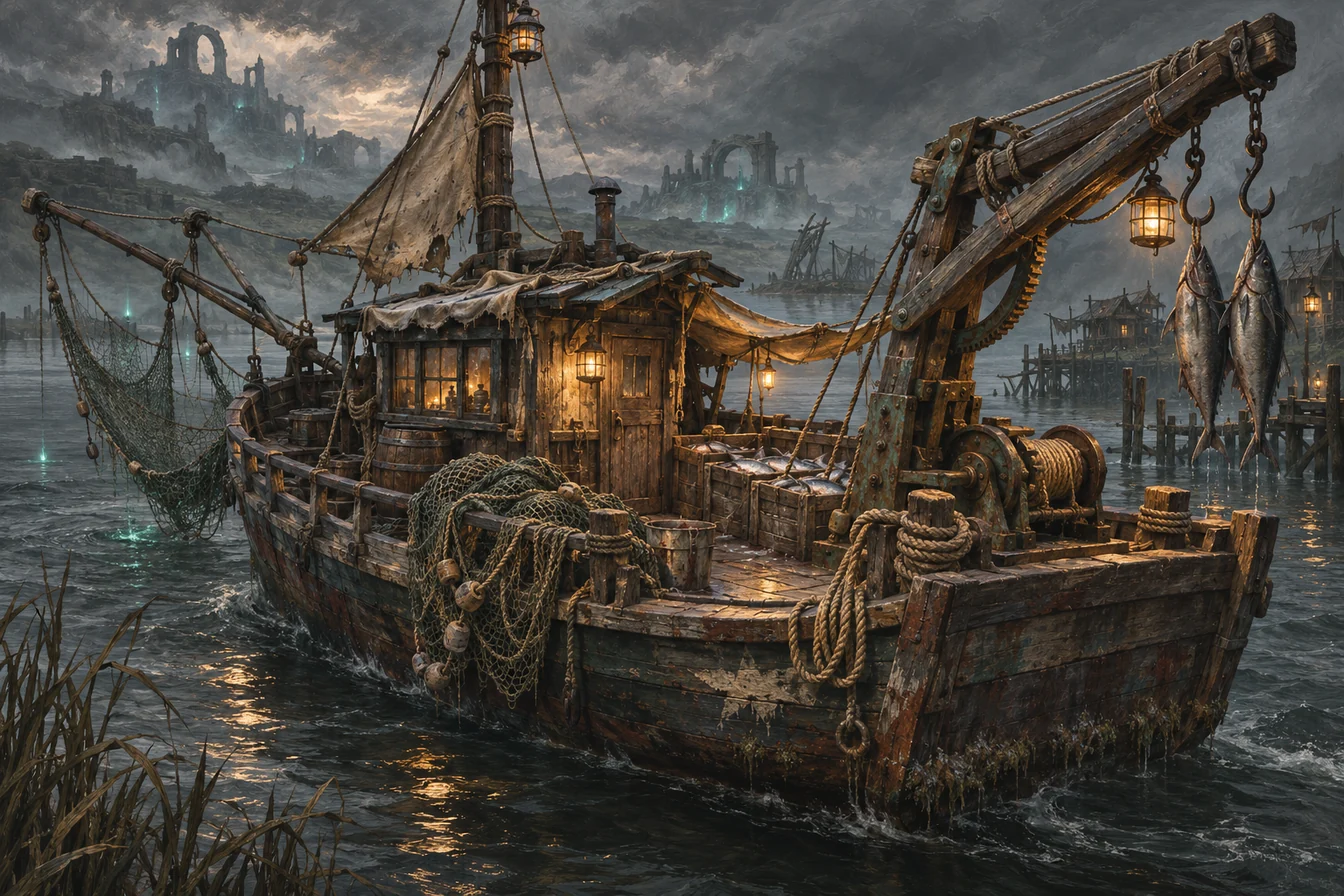
The first warning came from a Haranyan pilot who ran aground in fifty fathoms of charted water. When she climbed down to inspect the keel, she found it resting on the roof of a house. By morning, a whole street stood above the tide. Across the sea, a Nuian harbourmaster watched the water take his lighthouse, stone by stone.
Anthalon had found a way to redraw the shores of Erenor. Kyrios gave him the power to raise entire regions from the sea. Together they chose their ground carefully. A new headland could hide a fleet. A vanished strait could cut off the grain ships. By the time the East and West understood that the same hand had changed both their charts, each would have reason enough to blame the other. Anthalon and Kyrios intended to see both peoples destroyed.
Beyond the soundings
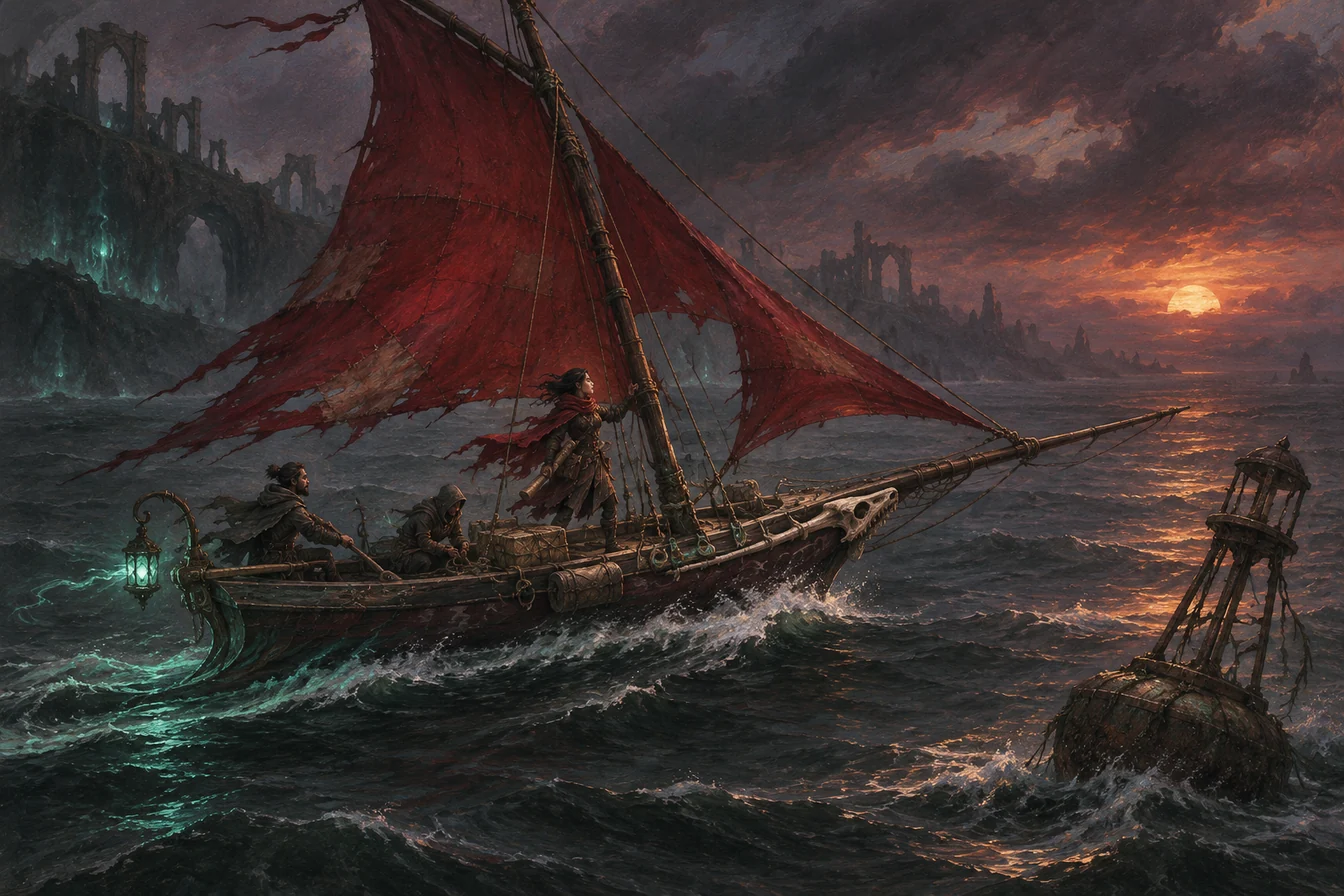
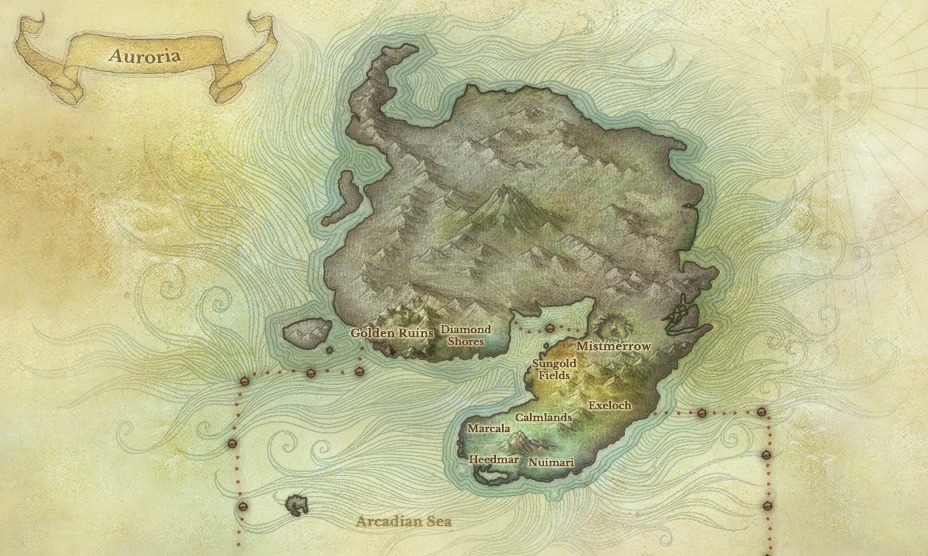
Three survey crews left Diamond Shores. Each brought back evidence of land absent from the chart. The names below are theirs. None would swear to a position until they had sailed the route twice.
The Salt Orchard
West of the Golden Ruins, low tide uncovered an orchard bowed under glass fruit. A scout picked one and heard his own voice call from the next row. There were teeth marks on the fruit he still held. Anthalon grew the orchard around the only freshwater spring on that coast. Its keepers, pale stags with human tongues, learn the roll call of each landing party and answer for anyone who goes missing.
The Bellfoundry
In the mountains north of Mistmerrow, the snow settled on a roof that had not been there the evening before. Inside, Kyrios had cast bronze wardens around empty suits of armour. They stood still while the scouts whispered. When a dropped buckle struck the floor, every helmet turned. The bells carry the sound of marching feet across the entire pass. An army can approach in silence or in armour. The scouts have yet to manage both.
The Drowned Stair
Off the northern cape, a lead line came back with its weight neatly untied. Beneath the hull the diver found steps descending into the sea, each dry enough to take a chalk mark. At the foot sat a creature stitching discarded shadows to the stone with fishing gut. Anthalon made it to hold the crossing. Kyrios gave it one instruction: let travellers descend, keep their shadows, and count how many try to climb back. The diver’s lamp returned with the boat. It has cast two shadows ever since.
The last ferry from Diamond Shores
Mara Vey sewed the patients’ names into their shirt collars before they left. Ink ran in salt water. She had learned that much in the first week at Diamond Shores, when six strangers were buried under the same name because the priest could still read it on one man’s wrist. Her husband Iven lay on the last stretcher. He held a length of thread between two fingers to keep it taut for her. She had to prise it loose when the order came to cast off.
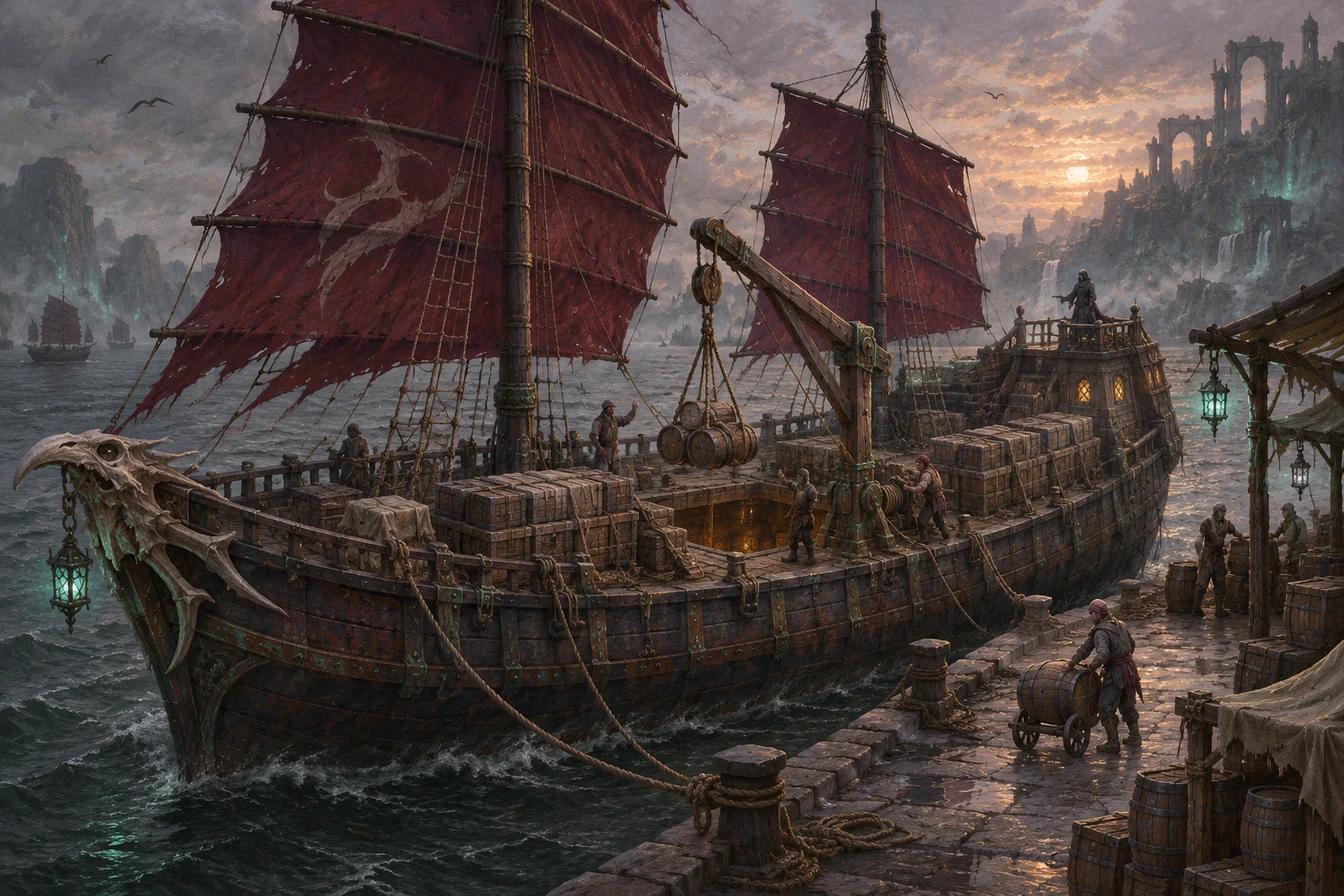
A Crimson Army corporal counted the stretchers from the quay. He wrote forty strokes on a slip of paper, folded it once and passed it to the bell ringer. Mara thought it was a customs tally. For the rest of her life she would remember that she thanked him for letting the boat through.
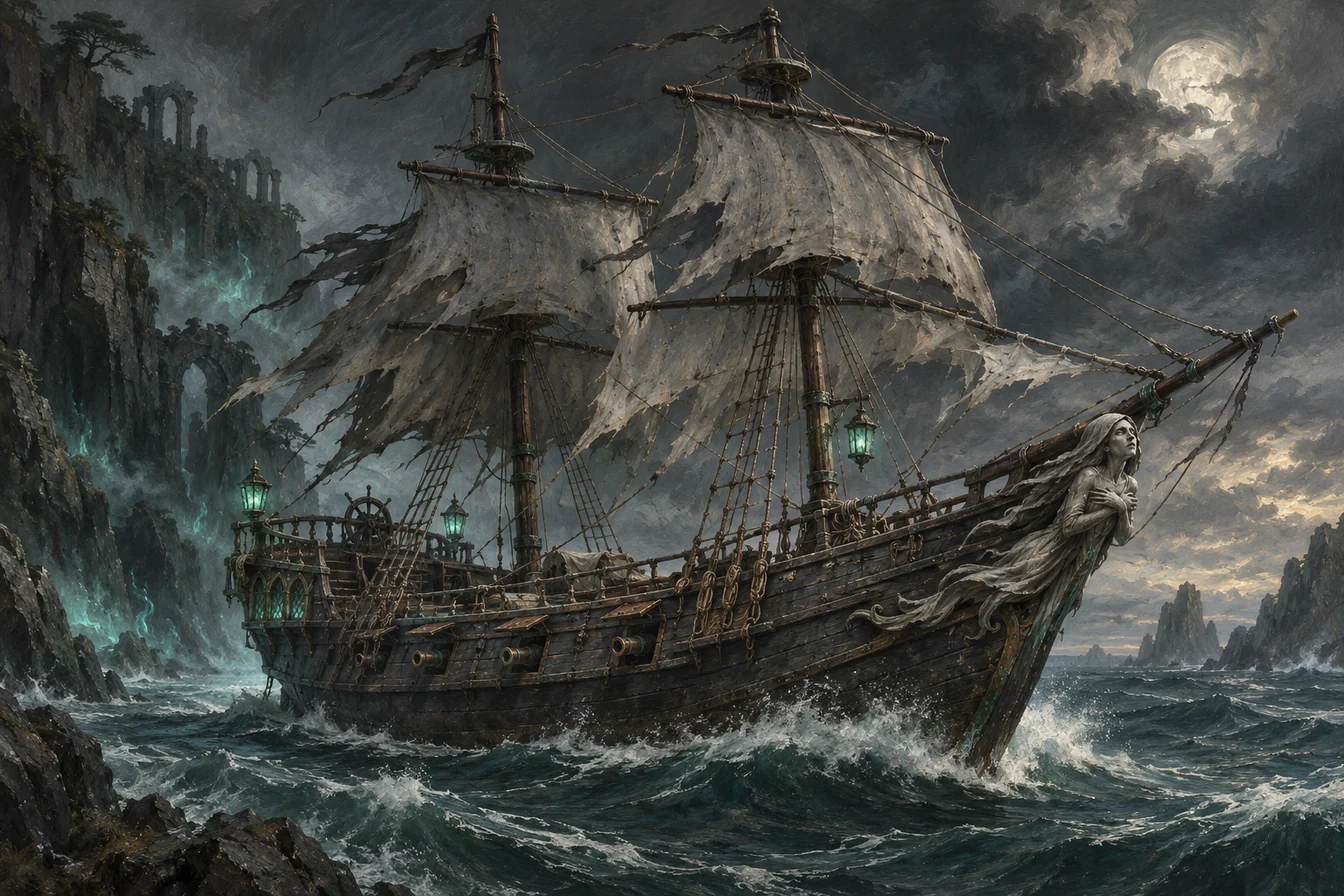
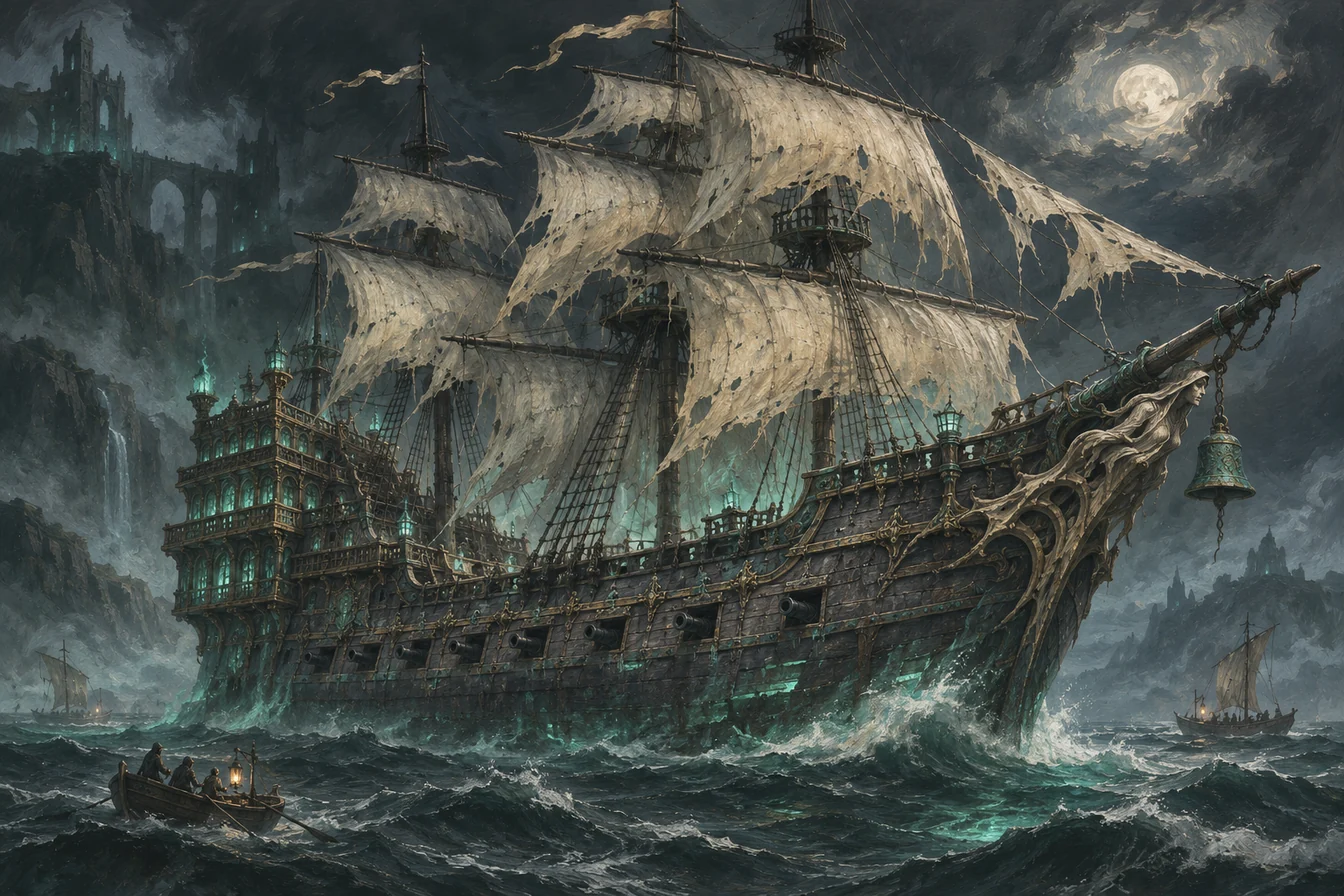
The hospital ferry carried forty patients and a boy whose job was to hold the lantern. As the channel narrowed, the pilot saw her own house rising out of the mud. Her sister stood in the doorway, still wearing the apron in which they had buried her. The pilot tied off the wheel and went over the side. The boy kept the lamp high until the ferry struck. For three nights people on shore saw its light moving from bed to bed beneath the water.
When the tide finally withdrew, the boy walked home. His mother dried his hair with a towel. She dressed the cut on his lip. Neither of them spoke about the damp shape of the lantern, plainly visible behind his ribs. In the morning she found forty little puddles on the kitchen floor. The patients had followed their light.
The coat at Widow’s Head
At Widow’s Head they found the first of the ferry’s coats hanging from a hawthorn. One sleeve dripped steadily onto the stones although there had been no rain for nine days. Mara knew the collar by the crooked V. When she took the coat down, the branch came with it. Fine roots had grown through the buttonholes and into the lining. They tightened when she said Iven’s name.
She followed the roots into Blackbriar Vale. An old operating table had split the trunk of the largest tree down the middle. Someone had laid out a basin and a clean saw beside it. In the bark Mara found the little knot of blue thread that Iven had held. She cut it free. Blood welled from the cut, hot enough to steam. Farther down the valley a man began to scream. She pushed the thread back into the tree until he stopped.
She spent that night with her palm pressed over the wound. Toward dawn something inside tapped twice against her hand. It was the knock Iven used at their door when his arms were full of firewood. She took her hand away. After a while he knocked again.
What the bells were for
The corporal was waiting where the road left the Red Weald. His name was Aren. He had brought the carbon copy of the ferry order, folded small enough to fit a hollow tooth. Mara broke the tooth against the hilt of her knife and caught the paper in her palm. Blood had blurred the signature. The order itself was quite legible. Hold the boat until all forty are aboard. Ring once for each.
In Cinderfold he showed her the back of the foundry. A wooden trough carried water downhill to the mill. A second carried blood uphill to the bell moulds, against the slope. Kyrios had provided the bronze. Anthalon had found a use for the last breath a drowning person lets out under water. Strike a finished bell and the breath went looking for its owner. The wardens had never needed to see the road. Anything alive within earshot turned its head when someone it loved called out.
That afternoon the army drove a column of prisoners through the pass. The first bell rang. A woman near the front stepped out of line and held her arms out to someone Mara couldn’t see. The guard opened her throat with a short knife. By the time her knees touched the road, the trough was carrying her blood up the hill. The next prisoner had watched it all. When the second bell rang, he stepped forward too.
Mara had come to cut the rope. Inside the bell tower she found forty of them, each ending in a shirt collar. She could read her own stitches. She chose Iven’s, wrapped the cord round her wrist and pulled until the bell cracked. Down in the pass the prisoners scattered. From somewhere close behind her a man said, quite ordinarily, “There’s more wood outside.” She kept both hands on the rope until the bronze came down.
Where Reedwind stood
When Mara reached Reedwind the reeds were still standing, each cut to the height of a child. Wind moved through the stalks without a sound. Beneath the causeway she found the missing lengths bound into pipes. Anthalon had fitted a strip of skin over each mouth. The first time the marsh breathed out, she heard a hundred children trying to whistle through their teeth. The ferrymen call the place Hushfen now. They carry beeswax for their ears and old nursery songs written on their cuffs.
In the next valley west, the water had gone out from under an entire fleet. The hulls stood upright in the silt at Keelgrave. From one came the steady tap of a shipwright driving nails. Mara put her ear to a plank. Someone inside was building a second hull around the crew, one board closer to their bunks each night. She fetched the quarry hands from Chimebreak. By dawn they had opened the first ship. There were thirty more across the field.
Pirate Cove
One chart made it back with a new name written in the margin. Pirate Cove lay beyond a reef that had split open in the upheaval. Two pirate castles commanded opposite sides of its harbour. At dusk, the survey crew saw their signal fires answer each other. Then the first broadside struck the water between them.
On the island immediately west of Golden Ruins, Pirate and Forgotten guilds can contest either castle in the proposed campaign. A siege begins at sea. A fleet must fight its way into the cove before its crew can land and assault a castle. Nuia and Haranya can join these wars to earn a week-long bonus for their own faction. See the landings and the ships that can reach them.
The third muster roll
At the cove, a Crimson Army deserter asked the harbour clerk to strike his name from the list of living men. He unbuckled his breastplate. On the inside someone had scratched forty names, one for every patient his company had orders to leave behind. Every night, he said, another name appeared in his own handwriting. The clerk turned the page. A woman in a sodden hospital shift was waiting to sign. Her fingers went through the pen. The deserter held it for her.
By dawn both had gone inland beneath the same scrap of red cloth. The clerk found a third muster roll on his desk, beside the rolls of East and West. Its heading read The Forgotten. Under “Ghost” a wet thumbprint had puckered the paper. Under “Crimson Army” someone had signed in rust-coloured ink. The next two lines were blank.
A pilot pencilled Mournhaven into the northeastern margin of his chart. Its ferryman accepts a name in place of a fare. On the return crossing he calls it out, and someone on the far bank always answers.
Weeks later, a packet reached Diamond Shores from Mournhaven by way of Lastgate. Inside lay a shirt collar, a needle and forty strips of clean linen. The priest recognised Mara’s writing. She had sent the names home so the families could put them on the right stones. At the bottom she had added one request in a cramped left hand. If my husband knocks, give him the key. He will have his arms full.
Ghost and Crimson Army soldier are the two proposed playable origins for The Forgotten. Follow their separate beginnings and the road to Halcyona.